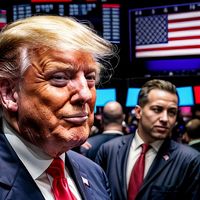
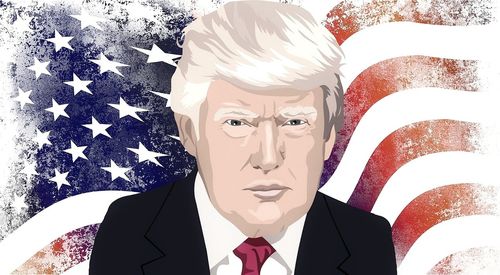
In the rapidly evolving domain of digital currencies, an unprecedented surge has recently captured the global stage, with Bitcoin scaling unprecedented heights by surpassing the $80,000 mark. This latest milestone is perceived by some as a reflection of the political climate that has emerged in the wake of Donald Trump's victory in the U.S. elections. This development unfolds against a backdrop of the escalating prominence of digital currencies and the divergent views held by Trump and Biden on the subject of cryptocurrencies.
Trump's Transformational View on Cryptocurrencies: From Skeptic to Proponent
Once a prominent skeptic of Bitcoin, Trump has undergone a remarkable transformation in his stance, now fully embracing cryptocurrencies. This shift is particularly striking given his earlier remarks, where he dismissed Bitcoin as being "backed by nothing" and voiced concerns regarding its volatility and the potential for misuse in illicit activities. However, recent developments, such as the establishment of World Liberty Financial by the Trump family, their venture into the crypto space, and his assertion that cryptocurrencies could "shape the future," signal a significant change in his position towards the cryptocurrency industry.
Contrasting Cryptocurrency Policies: Trump vs. Biden
While Trump has emerged as an advocate for a "strategic national bitcoin reserve" and the expansion of the U.S. bitcoin mining industry, the Biden administration has adopted a more prudent approach. Prominent figures within the administration, including Securities and Exchange Commission Chairman Gary Gensler, have characterized the crypto market as "susceptible to fraud, deception, and misconduct." Under Gensler's guidance, the SEC has been proactive in pursuing legal action against crypto firms and enforcing regulations, which has induced apprehension among those invested in cryptocurrencies.
The Economic Implications of Crypto and Prospects for the Future
The recent upsurge in the value of Bitcoin and other digital currencies, such as Dogecoin—championed by Elon Musk, a prominent supporter of Trump—demonstrates a burgeoning belief in the potential of cryptocurrencies to revolutionize the financial sector. The crypto community perceives Trump's electoral success as a favorable development, anticipating more transparent regulations and support for the growth of the U.S. crypto market.
In conclusion, Bitcoin's historic high and the broader acceptance of cryptocurrencies seem to be influenced by political trends, with Trump's pivot towards a pro-cryptocurrency stance and the potential for a more crypto-friendly regulatory framework in the United States. This alignment of political and economic forces may herald a new era in the evolution of digital currencies, with far-reaching implications for the global financial system. As the world watches, the interplay between political advocacy and technological innovation will undoubtedly shape the future trajectory of cryptocurrencies.
To delve deeper into the economic implications, the rise of Bitcoin and the broader cryptocurrency market has been a topic of intense debate among economists, financial experts, and policymakers. On one hand, proponents argue that cryptocurrencies offer a decentralized alternative to traditional financial systems, providing a hedge against inflation and offering increased financial privacy. On the other hand, critics warn of the potential for market manipulation, the lack of intrinsic value, and the environmental impact of energy-intensive mining processes.
The potential economic impact of a more crypto-friendly regulatory environment in the United States could be significant. Clearer regulations could attract more institutional investors, leading to increased liquidity and stability in the market. Additionally, a strategic national bitcoin reserve could potentially diversify the country's assets and hedge against traditional market risks. However, this would also require a robust framework to mitigate the risks associated with market volatility and illicit activities.
Furthermore, the expansion of the U.S. bitcoin mining industry could have economic benefits, such as job creation and technological innovation. However, it also raises concerns about the environmental impact, as the energy consumption of mining operations is substantial. Balancing these economic and environmental considerations will be a critical challenge for policymakers.
Looking ahead, the future of cryptocurrencies is uncertain but potentially transformative. As the technology matures and regulatory frameworks evolve, cryptocurrencies could become a more integral part of the global financial system. This could lead to a reconfiguration of traditional financial power structures, with implications for monetary policy, international trade, and economic development.
In this context, Trump's advocacy for cryptocurrencies could be seen as a reflection of his broader economic philosophy, which often emphasizes deregulation and market-driven solutions. His support for the industry could be interpreted as an endorsement of innovation and a departure from more traditional financial policies.
Conversely, the Biden administration's more cautious approach to cryptocurrencies may be indicative of a desire to balance innovation with consumer protection and financial stability. This approach could lead to a more measured and incremental integration of cryptocurrencies into the financial system, with a focus on mitigating risks and ensuring regulatory compliance.
Ultimately, the debate over cryptocurrencies is not just about technology or finance; it is also about the future of money itself. As the world grapples with the implications of digital currencies, the role of political leadership will be crucial in shaping the direction of this transformative technology. Whether through advocacy or regulation, the actions of political figures like Trump and Biden will have a lasting impact on the trajectory of cryptocurrencies and their integration into the global economy.

By Victoria Gonzalez/Nov 13, 2024

By Michael Brown/Nov 11, 2024

By Samuel Cooper/Nov 11, 2024

By Sophia Lewis/Nov 11, 2024

By Laura Wilson/Nov 11, 2024

By Olivia Reed/Nov 11, 2024

By Amanda Phillips/Nov 11, 2024

By Emily Johnson/Nov 11, 2024

By Ryan Martin/Nov 11, 2024

By Rebecca Stewart/Nov 11, 2024

By Olivia Reed/Nov 11, 2024

By David Anderson/Nov 8, 2024

By Daniel Scott/Nov 8, 2024
By George Bailey/Nov 8, 2024

By Olivia Reed/Nov 8, 2024

By Joshua Howard/Nov 8, 2024

By Christopher Harris/Nov 8, 2024

By Daniel Scott/Nov 8, 2024
By George Bailey/Nov 8, 2024

By Sarah Davis/Nov 8, 2024