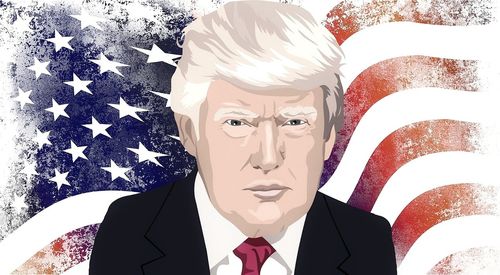
The resurgence of Donald Trump in the White House was propelled by a surge of public discontent due to the rising cost of living. Voters, frustrated by the increasing prices of daily necessities such as groceries and car insurance, have shown the Democrats the exit in Washington.
Trump, known for his populist appeal, reminded voters that inflation was not a significant issue during his previous term and promised to address the high prices by challenging the established order. However, there is a cautionary tale: the policies that resonated with the electorate—mass deportations and high tariffs—could potentially exacerbate inflation if implemented.
The bond market is already showing signs of unease over Trump's intentions to add trillions to the national debt, with bond yields climbing significantly. This trend could increase the cost of mortgages, home equity loans, and car financing, further burdening household budgets. Ryan Sweet, Chief US Economist at Oxford Economics, warned, "The lesson of this election shouldn’t be overlooked by Republicans – inflation is not well-received by voters, and they will remember this."
It is still premature to predict which of Trump's campaign promises will come to fruition. Wall Street, for now, seems unfazed by the prospect of inflation. Investors appear to bet that Trump will not carry out his threats to impose tariffs on all $3 trillion of US imports or that he will not be able to deport millions of undocumented workers. This optimism may be justified, given the historical tendency of presidents to soften their positions once they are in office.
Voters made their economic frustrations clear on election day, with two-thirds (67%) describing the US economy as not good or poor, according to exit polls. Despite record low unemployment, only 32% rated the economy as excellent or good. This sentiment was a decisive factor in the election's outcome, with 69% of those who viewed the economy negatively voting for Trump. The economy was also the top issue for 40% of Latino voters, a demographic that Trump won convincingly.
The data highlights the depth of voter anger over living costs. Although the inflation rate has significantly decreased from its four-decade high of 9.1% in June 2022, prices have not retreated. As Sweet pointed out, "While economists focus on the rate of price changes, consumers focus on the level of prices." Many Americans can recall with precision the prices of gasoline, milk, and bread from years ago, and they are acutely aware that their expenses have grown under President Joe Biden's administration.
The average US household now spends $1,120 more per month than in January 2021 to maintain the same standard of living, according to Moody’s Analytics. While paychecks have also increased by an average of $1,192 per month, many are simply treading water, with their pay raises going directly towards covering the increased cost of living. For many, wages have not kept pace with inflation, leading to a significant shift in voter sentiment, especially in counties where wages have lagged behind prices.
On the campaign trail, Trump promised not only to reduce inflation but to dramatically drive prices down through mass deportations and unleashing fossil fuel production. He vowed to make prices "come down fast." However, broad-based price declines are not only improbable but could also trigger a vicious cycle that is difficult to escape. As Sweet noted, "The price level for many consumer goods and services aren’t going to plunge. The level of prices for many things is permanently higher."
Trump's agenda, including his advocacy for tariffs and deportations, could potentially increase prices if enacted. He has touted tariffs as a cure-all, threatening to impose them widely. A recent working paper by the Peterson Institute for International Economics warned that Trump's promises could weaken growth, boost inflation, and lower employment, with inflation climbing to at least 6% by 2026 and consumer prices 20% higher by 2028.
Trump has insisted that his trade agenda will not be inflationary, citing modest price increases during his administration despite significant tariffs on China. However, his calls for across-the-board tariffs have alarmed mainstream economists, who point to studies showing that Americans bore almost the entire cost of Trump’s tariffs on China. These proposals could cost the average US household over $2,600 a year, according to the Peterson Institute.
The National Retail Federation, a trade group representing retailers, estimates that tariffs on apparel, toys, furniture, household appliances, footwear, and travel goods alone would cost Americans at least $46 billion a year. Daniel Alpert, managing partner at Westwood Capital, warned of a scenario where "We’re going to have higher domestic prices for goods and some services…and we’re going to have no overall improvement to the jobs picture or the wage picture."
Even Stephen Moore, a conservative economist and supporter of Trump's agenda, expressed reservations about the proposed tariffs. "When Trump uses tariffs as a negotiating tool, I’m fine with that," Moore said. "But I don’t want to see us dramatically raise tariffs on imported goods. Tariffs are taxes. And my worry is, if you take it too far, you’re going to get into a tit-for-tat situation."
The looming question of the next Trump era is whether he will moderate his economic proposals to avoid stoking inflation or double down on tariffs, potentially inviting a return of inflation. The answer will have far-reaching implications for the US economy and the well-being of its citizens.

By Victoria Gonzalez/Nov 13, 2024

By Michael Brown/Nov 11, 2024

By Samuel Cooper/Nov 11, 2024

By Sophia Lewis/Nov 11, 2024

By Laura Wilson/Nov 11, 2024

By Olivia Reed/Nov 11, 2024

By Amanda Phillips/Nov 11, 2024

By Emily Johnson/Nov 11, 2024

By Ryan Martin/Nov 11, 2024

By Rebecca Stewart/Nov 11, 2024

By Olivia Reed/Nov 11, 2024

By David Anderson/Nov 8, 2024

By Daniel Scott/Nov 8, 2024

By George Bailey/Nov 8, 2024

By Olivia Reed/Nov 8, 2024

By Joshua Howard/Nov 8, 2024

By Christopher Harris/Nov 8, 2024

By Daniel Scott/Nov 8, 2024
By George Bailey/Nov 8, 2024
By Sarah Davis/Nov 8, 2024