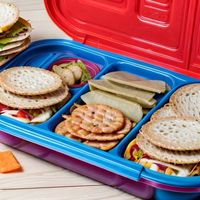
Kraft Heinz, the manufacturer of the popular Lunchables, has announced its decision to withdraw the product from the National School Lunch Program across the United States.
This move comes after the company's product did not meet the anticipated demand, as stated in a recent communication from Kraft Heinz. The withdrawal is also influenced by health concerns raised by Consumer Reports, which found elevated levels of sodium, lead, and cadmium in the school-specific versions of these meal kits. Brian Ronholm, Director of Food Policy at Consumer Reports, expressed satisfaction with Kraft Heinz's decision and called for the USDA to enforce stricter standards for school lunch programs to ensure healthier options for millions of children. The National School Lunch Program, a federally assisted initiative providing low-cost and free nutritionally balanced meals to students, serves nearly 30 million children, according to the US Department of Agriculture's Food and Nutrition Service.
Last year, Kraft Heinz introduced two types of Lunchables to the school lunch program: Turkey & Cheddar Cracker Stackers and Extra Cheesy Pizza. However, Consumer Reports discovered that these school-specific kits contained even higher sodium levels than those available in grocery stores. The sodium content in the tested store-bought lunch and snack kits ranged from 460 to 740 milligrams per serving, which is nearly a quarter to half of a child's daily recommended limit for sodium.
The turkey and cheddar school versions of Lunchables contained a staggering 930 milligrams of sodium, compared to 740 milligrams in the store-bought version. In response to these findings, US Secretary of Agriculture Tom Vilsack proposed amendments to school food guidelines aimed at gradually reducing sodium and added sugar levels. Excessive sodium intake can lead to increased blood pressure and a heightened risk of heart attack and stroke, as reported by the US Centers for Disease Control and Prevention.
Despite the higher sodium content, the school version of Lunchables did include increased levels of protein and whole grains compared to their grocery store counterparts, as previously stated by Kraft Heinz. The company mentioned in a statement, "Last year, we introduced two NSLP-compliant Lunchables options to schools that offered increased protein.
While many school administrators were excited about these options, the demand did not align with our targets. This is not uncommon across our diverse product range, especially as we explore new sales channels. Lunchables are no longer available in schools this year, and we plan to revisit the possibility in the future. The NSLP-compliant Lunchables sales from last school year accounted for less than 1% of overall Lunchables sales, making the business impact minimal."
In addition to Lunchables, Consumer Reports tested other store-bought meal kits from various brands, including Armour LunchMakers, Good & Gather, Greenfield Natural Meat Co., and Oscar Mayer. The report not only highlighted higher sodium levels in Lunchables but also detected the presence of lead, cadmium, or both in all the tested kits, although none exceeded federal limits. Cadmium has been linked to kidney and bone diseases as well as cancer by the World Health Organization.
As natural elements, heavy metals such as lead and cadmium are present in the soil where crops are grown, making their complete avoidance impossible. However, some crop fields and regions contain higher toxic levels due to the overuse of metal-containing pesticides and ongoing industrial pollution. The CDC states that there is no safe level of lead for children, as lead accumulates in the body over time, a process known as bioaccumulation. This accumulation means that even very low levels of ongoing exposure can become toxic, with infants being particularly vulnerable to the harmful effects of lead due to their smaller size and developing systems.
The decision by Kraft Heinz to remove Lunchables from the National School Lunch Program is a significant step towards addressing the health concerns surrounding the nutritional content of school meals. It underscores the need for continued vigilance and improvement in the quality of food provided to children in educational settings. As the National School Lunch Program serves a vast number of children, the impact of the food it provides extends beyond individual health, affecting the overall well-being and development of the next generation. The withdrawal of Lunchables from schools is a reminder of the importance of maintaining high nutritional standards and the role that both industry and regulatory bodies play in shaping the health of the nation's youth.
In light of these developments, it is crucial for the USDA to continue its efforts to enforce stricter eligibility standards for school lunch programs. This will ensure that the millions of children who rely on these programs receive the healthiest options possible. The inclusion of nutritious, balanced meals in school lunch programs is not just a matter of taste or preference; it is a matter of public health and the long-term health of the nation. By addressing the sodium, lead, and cadmium content in school meals, the USDA can help to mitigate the risks associated with these elements and promote healthier eating habits among children.
The withdrawal of Lunchables from schools also presents an opportunity for other food manufacturers to step up and offer healthier, more nutritious alternatives. The market for school lunches is vast, and there is a clear demand for products that meet the nutritional needs of children while also being appealing and enjoyable. Manufacturers that can develop such products will not only contribute to the health of the nation's youth but also position themselves as leaders in the industry.
In conclusion, the decision by Kraft Heinz to remove Lunchables from the National School Lunch Program is a positive step towards improving the nutritional quality of school meals. It highlights the importance of ongoing efforts to monitor and regulate the content of food provided to children in schools. As the health of the nation's children is a priority, it is essential that all stakeholders, including the USDA, food manufacturers, and educational institutions, work together to ensure that the food served in schools meets the highest nutritional standards.
By Victoria Gonzalez/Nov 13, 2024

By Michael Brown/Nov 11, 2024

By Samuel Cooper/Nov 11, 2024

By Sophia Lewis/Nov 11, 2024

By Laura Wilson/Nov 11, 2024

By Olivia Reed/Nov 11, 2024

By Amanda Phillips/Nov 11, 2024

By Emily Johnson/Nov 11, 2024

By Ryan Martin/Nov 11, 2024

By Rebecca Stewart/Nov 11, 2024

By Olivia Reed/Nov 11, 2024

By David Anderson/Nov 8, 2024

By Daniel Scott/Nov 8, 2024

By George Bailey/Nov 8, 2024
By Olivia Reed/Nov 8, 2024

By Joshua Howard/Nov 8, 2024

By Christopher Harris/Nov 8, 2024

By Daniel Scott/Nov 8, 2024

By George Bailey/Nov 8, 2024

By Sarah Davis/Nov 8, 2024