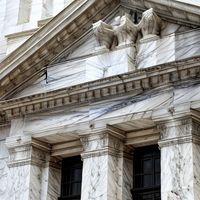
Within the serene confines of the Federal Reserve, a significant resolution was reached amidst the chaotic backdrop of the US presidential election: interest rates were reduced by 0.25%.
This action, marking the second decrease since September, underscores the central bank's ongoing endeavors to mitigate the financial burdens of credit card debts, auto loans, and other monetary responsibilities that bear down on the American populace. Chairman Jerome Powell, with unwavering determination that reverberates through the corridors of authority, has vowed to serve his term until mid-2026, impervious to the political currents that may emanate from the White House.
The most recent reduction in rates, though modest in comparison to the previous one, serves as a beacon of optimism amidst a sea of economic unpredictability. It is a response to the sluggish inflation and a job market that has lost its vigor, a decision that clears the path for a more financially feasible future. As the calendar approaches 2025, the possibility of further rate reductions looms on the horizon, with their frequency and timing obscured by the potential policy shifts proposed by President-elect Donald Trump.
Trump's economic strategy, a complex weave of tax reductions, deregulation, and tariffs, is seen by some as a potential catalyst for inflation, a force that could significantly alter the Federal Reserve's trajectory. Oxford Economics, in its measured analysis, suggests that the outlook for the upcoming year remains largely unchanged, allowing for the possibility of additional rate reductions as anticipated in September. However, analysts at Nomura, with a more urgent tone, foresee a rapid implementation of Trump's plans, predicting only a single rate reduction for the year ahead.
The intricacies of Trump's policies, which necessitate Congressional approval, add another layer to the economic enigma. With Republicans controlling the Senate and potentially the House, the stage is set for a legislative ballet that will sculpt the nation's economic destiny. The Federal Reserve, ever the vigilant guardian of economic stability, will eventually need to incorporate these fiscal shifts into its official forecasts, a task that demands both foresight and nimbleness.
Powell, in his capacity as the navigator of the nation's monetary policy, has made it evident that the election's outcome will not influence the Federal Reserve's immediate decisions. This reassurance is a nod to the widely expected rate reduction on the December horizon. William English, a former senior Federal Reserve advisor, echoes this sentiment, anticipating a December reduction due to the persistent impact of borrowing costs on the economy, a decision that hinges on the forthcoming employment and inflation figures.
Powell, with the calm demeanor of a seasoned economist, has stated that the Federal Reserve closely monitors proposed policies, creating "alternative simulations" to understand their potential impact. Once policies are enacted by Congress, these simulations are refined with additional data, assisting officials in forming their baseline economic forecasts. The Federal Reserve releases these forecasts quarterly, with the next one due in December.
In his interactions with the press, Powell has adeptly sidestepped political inquiries, focusing instead on the economic indicators that guide the Federal Reserve's actions. He has asserted that the president lacks the authority to dismiss him or any other Federal Reserve official from their leadership positions, a statement that resonates with the principle of the Federal Reserve's independence.
The economic data since September has demonstrated resilience, particularly in the Personal Consumption Expenditures price index, the Federal Reserve's preferred gauge of inflation. Powell acknowledges the strength of the latest data, yet maintains a cautious stance, emphasizing the Federal Reserve's mandate of maximum employment and price stability. He admits that even with the current rate reduction, policy remains restrictive, a factor that has prompted the Federal Reserve to continue its path of rate reductions.
The economy, according to Powell, is performing well, yet the specter of high inflation looms in the minds of Americans, despite significant improvements over the past two years. He suggests that an extended period of rising real earnings could alleviate the economic anxieties that plague the nation.
As the Federal Reserve contemplates its next moves, it is clear that officials are in no rush to return interest rates to the neutral rate, a level that neither stimulates nor suppresses economic activity. This patient approach could mean that the Federal Reserve will maintain a steady hand in the coming year, as it weighs the risks of a deteriorating job market against the risks of inflation stalling or re-accelerating.
The labor market, a critical gauge of economic health, has shown signs of slowing momentum. Job openings have decreased, and the rate of hiring has fallen, while the unemployment rate has edged upwards. Yet, the economy has demonstrated robust growth, expanding at a solid 2.8% annualized rate in the third quarter, driven by consumer spending and business investment.
On the front of inflation, Powell is cautiously optimistic, refraining from declaring victory but noting a consistent narrative of inflation continuing its downward trend. As the Federal Reserve navigates the complexities of the economic landscape, it remains committed to its dual mandate, ever vigilant and adaptable in the face of political and economic currents.

By Victoria Gonzalez/Nov 13, 2024

By Michael Brown/Nov 11, 2024

By Samuel Cooper/Nov 11, 2024

By Sophia Lewis/Nov 11, 2024

By Laura Wilson/Nov 11, 2024

By Olivia Reed/Nov 11, 2024

By Amanda Phillips/Nov 11, 2024

By Emily Johnson/Nov 11, 2024

By Ryan Martin/Nov 11, 2024

By Rebecca Stewart/Nov 11, 2024

By Olivia Reed/Nov 11, 2024

By David Anderson/Nov 8, 2024

By Daniel Scott/Nov 8, 2024
By George Bailey/Nov 8, 2024

By Olivia Reed/Nov 8, 2024

By Joshua Howard/Nov 8, 2024

By Christopher Harris/Nov 8, 2024

By Daniel Scott/Nov 8, 2024
By George Bailey/Nov 8, 2024
By Sarah Davis/Nov 8, 2024