On a Wednesday morning, my email inbox was inundated with a flurry of analyst reports, all eagerly discussing the potential benefits of the election results for various market sectors. Financial giants, ranging from banks to credit card companies, appeared poised for growth. Companies associated with private prisons and those expected to aid in mass deportations were also in the limelight.
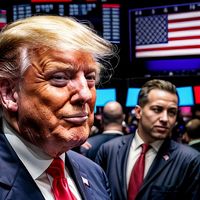
Cryptocurrency enthusiasts were particularly jubilant, rejoicing in the victory of a candidate who seemed to offer them unparalleled opportunities. As the New York stock market opened, this enthusiasm for the so-called Trump trades reached a peak. The three major stock indexes surged, reflecting investors' relief at a decisive outcome. The Dow Jones Industrial Average experienced one of its strongest days ever, and Bitcoin soared to an unprecedented high above $75,000.
One might interpret the market's reaction as an endorsement of the president-elect's autocratic proposals, a sentiment that seems out of touch, given the campaign's threats of violence against political rivals and journalists. However, traders are essentially doing what they do best: seeking potential profits in the days and weeks ahead.
Step back from the chaos, and many of these same traders will admit that the long-term outlook for the stock market is, at best, enveloped in uncertainty. "People dislike missing out on opportunities to profit, so they're hastily buying in and picking up assets that they can quickly sell before the market turns," Daniel Alpert, managing partner at Westwood Capital, confided in me. "There's still significant volatility in this market... And I believe we'll witness a significant reversal of these trades as the reality of the news begins to sink in."
Markets generally flourish in a stable, largely predictable macro environment. The more gridlock in Washington, the better, if you ask Wall Street, for nothing disrupts a portfolio like an abrupt shift—spiking inflation, a surge in unemployment, or a new policy decree delivered via a Truth post—that could send shockwaves through the market.
Part of the surge is simply that large money managers had been aggressively reducing their exposure in the weeks leading up to the election, as Alpert and others noted. Wednesday morning brought an unexpectedly clear result. "We were going to have a positive reaction today, regardless of who won," Art Hogan, chief market strategist at B Riley Wealth Management, told my colleague Matt Egan on Wednesday. "There's clarity... The market is breathing a huge sigh of relief on that."
If Trump follows through on his campaign promises, a larger deficit, surging inflation, and worker deportations could be on the horizon, with economic growth taking a drastic hit. "All of that doesn't bode well for the future," Hogan observes. "But the future is not now." In other words, lock in those profits while you can. Because when the reality of Trump's economic plans sets in, everything will change once again. The changes he's proposing would steer the world's largest economy into uncharted territory, almost certainly driving inflation higher.
Chief among those proposals: blanket tariffs on imports, which would force US companies to pay more for critical supplies and raise costs for consumers. Virtually all mainstream economists oppose tariffs on that scale and expect they would cause inflation to rise yet again. "My worst-case scenario is that he's actually successful with his blanket tariff policies," Alpert told me. "If the House goes Republican, there will be absolutely no limits to what tariff policy Trump can enact... and to the extent that he does that, he's going to create the worst of both worlds, with higher domestic prices for goods and some services, and no overall improvement to the jobs picture."
The initial market euphoria, driven by the clarity of the election result, may be short-lived. Investors are aware that the policies proposed by the new administration could lead to significant market disruptions. The prospect of widespread tariffs, for instance, is a cause for concern among economists and market analysts alike. Such measures could not only increase the cost of living for consumers but also stifle economic growth by making it more expensive for businesses to operate.
Moreover, the potential for increased inflation due to these policies could have far-reaching implications. Higher inflation rates can erode the purchasing power of consumers, leading to a decrease in spending, which in turn can slow down economic activity. This is a scenario that investors are keen to avoid, as it could lead to a decline in stock market values and a potential recession.
The market's initial response to the election results, therefore, may be seen as a knee-jerk reaction to the immediate relief of uncertainty. As the dust settles and the true implications of the new administration's policies become clearer, investors may reassess their positions, leading to a more measured and potentially more volatile market.
In conclusion, while the short-term market reaction to the election may have been one of optimism, the long-term outlook remains clouded in uncertainty. Investors would be wise to proceed with caution, keeping a close eye on the policy developments and their potential impact on the economy and the markets. The road ahead is fraught with potential pitfalls, and only time will tell how the market will navigate these uncharted waters.

By Victoria Gonzalez/Nov 13, 2024

By Michael Brown/Nov 11, 2024

By Samuel Cooper/Nov 11, 2024

By Sophia Lewis/Nov 11, 2024

By Laura Wilson/Nov 11, 2024

By Olivia Reed/Nov 11, 2024

By Amanda Phillips/Nov 11, 2024

By Emily Johnson/Nov 11, 2024

By Ryan Martin/Nov 11, 2024

By Rebecca Stewart/Nov 11, 2024

By Olivia Reed/Nov 11, 2024

By David Anderson/Nov 8, 2024

By Daniel Scott/Nov 8, 2024
By George Bailey/Nov 8, 2024

By Olivia Reed/Nov 8, 2024

By Joshua Howard/Nov 8, 2024

By Christopher Harris/Nov 8, 2024

By Daniel Scott/Nov 8, 2024
By George Bailey/Nov 8, 2024
By Sarah Davis/Nov 8, 2024